

Industrial operations can consume substantial amounts of electricity during working hours. Manufacturing machinery, compressors, pumps, ventilation equipment, lighting, cooling systems, and production support equipment all contribute to energy demand.
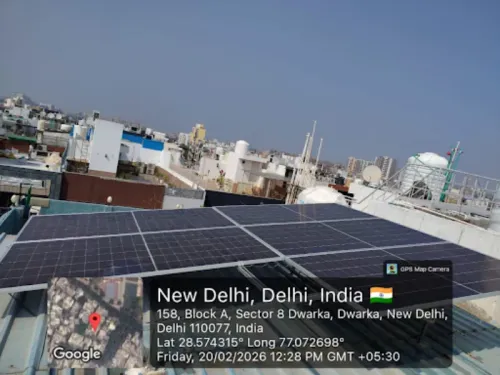
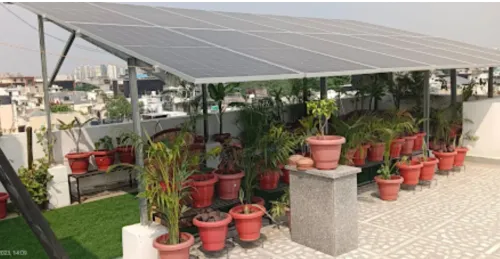
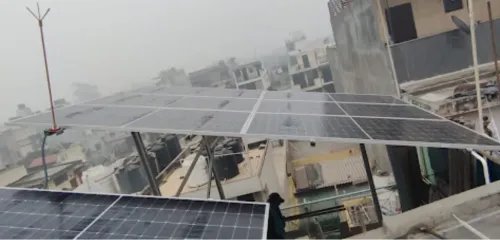
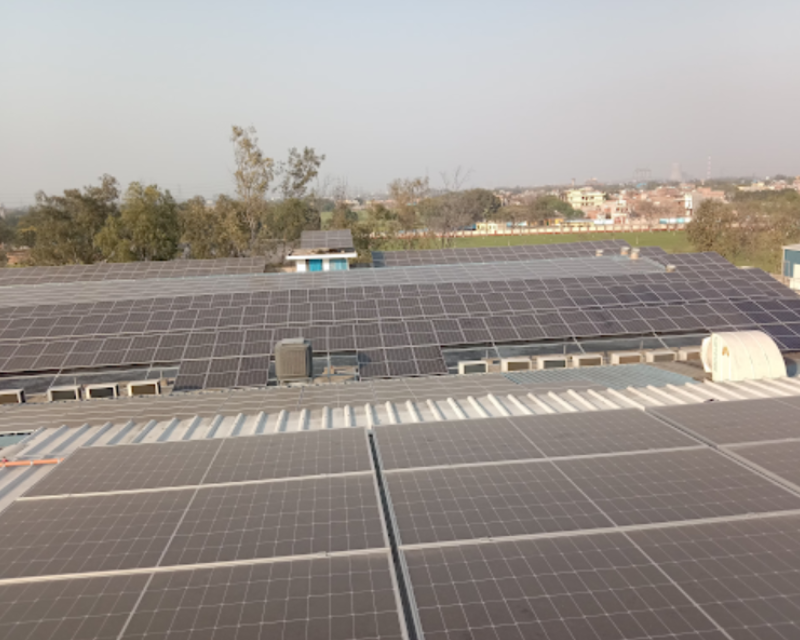
For industrial facilities in Greater Noida, solar panels for your factory can provide an opportunity to generate part of this electricity directly at the facility.
Why Factories Can Be Well Suited to Solar
Many industrial operations run primarily during daylight hours, which can align well with solar generation.
Factories may also have substantial roof areas across production sheds, warehouses, administrative blocks, and utility buildings. When these areas are structurally and technically suitable, they can provide valuable space for solar modules.
Begin With an Energy Consumption Study
Industrial solar planning should start with electricity data rather than available roof area alone.
Review:
- Monthly electricity consumption
- Daytime load
- Seasonal variations
- Operating shifts
- Major electrical equipment
- Demand patterns
This information helps determine how solar generation can fit into the facility's actual energy requirements.
Industrial Roofs Need Detailed Assessment
Factory roofs can vary significantly in construction and condition.
Metal roofing, concrete roofs, roof-mounted equipment, skylights, ventilation systems, and existing utilities must be considered when designing the solar array.
Structural suitability is particularly important. The mounting arrangement should be planned according to roof characteristics and site conditions.
Avoid Designing Only for Maximum Capacity
Covering every available area with panels is not always the best strategy.
A system should be designed around energy requirements, technical feasibility, electrical infrastructure, and expected generation.
Shadow patterns, maintenance access, fire-safety considerations, cable routes, and existing equipment can affect module placement.
Evaluate Financial Performance Over Time
Industrial solar projects are usually assessed as long-term energy investments.
Decision-makers can examine expected annual generation, current electricity costs, projected savings, operating expenses, equipment warranties, and expected system life.
The relevant question is not merely how much the project costs. It is how much useful electricity the installation is expected to produce throughout its operating period.
Engineering Quality Has Long-Term Importance
Industrial solar systems involve significant electrical capacity. Engineering, protection systems, earthing, cable selection, inverter configuration, and commissioning need careful attention.
Poor engineering can reduce reliability even when high-quality modules are used.
Companies evaluating proposals should therefore examine the provider's complete technical scope.
Monitoring Supports Better Energy Management
Generation monitoring allows facility managers to track solar production and identify performance changes.
Combining solar generation information with facility consumption data can also improve understanding of overall energy use.
Verde Solaire Private Limited works with renewable energy projects for industrial and other customer categories. Businesses considering solar panels for your factory in Greater Noida can begin with a detailed assessment of electricity consumption, rooftop feasibility, technical infrastructure, and expected generation.
For factories with suitable daytime loads and usable installation space, solar can become a meaningful component of long-term energy planning and renewable energy adoption.