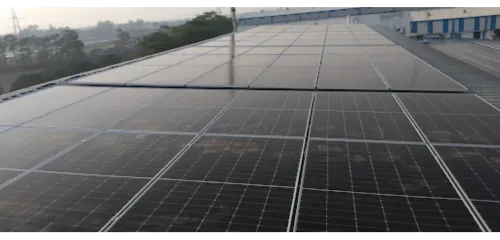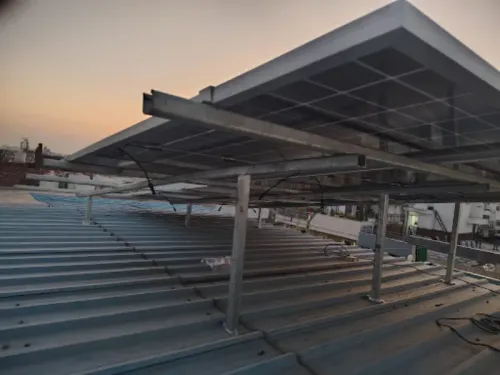


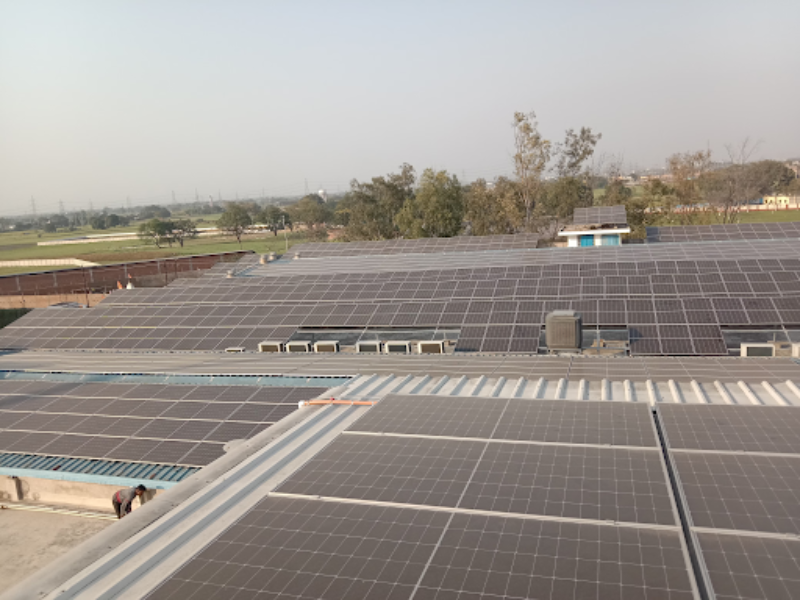
Factories often consume significant amounts of electricity during production hours. Machinery, motors, compressors, ventilation systems, lighting, cooling equipment, pumps, and administrative facilities can create substantial daytime electricity demand. This makes solar panels for your factory worth evaluating as part of a broader energy-management strategy.
For industrial facilities in Noida, Uttar Pradesh, the suitability of solar depends on much more than simply having a large roof.
Daytime Consumption Creates a Useful Solar Opportunity
Solar panels generate electricity during daylight hours, which can align well with factories operating daytime shifts.
When a facility consumes a significant share of its electricity while the solar plant is generating, solar energy can contribute directly to operational loads, subject to the system design and electrical configuration.
The first step is therefore to understand the facility's load profile.
Monthly electricity bills provide useful information, but detailed consumption patterns can offer an even clearer picture of when power is being used.
Industrial Roofs Need Detailed Assessment
Factories may have extensive roofing areas, yet not all roof sections will necessarily be suitable for solar modules.
Engineers should consider:
- Roof condition
- Structural characteristics
- Existing equipment
- Skylights and ventilation systems
- Shadow patterns
- Access pathways
- Drainage requirements
- Future expansion plans
Industrial roofs can also contain ducts, exhaust systems, service lines, and other infrastructure that must remain accessible.
System Design Should Reflect Operations
A factory solar plant needs to work alongside existing electrical infrastructure.
The design should consider connected loads, transformer capacity, electrical panels, inverter locations, cable routing, safety requirements, and how the solar system will integrate with the facility.
Production schedules also matter. A plant operating six days a week may have a different consumption profile from one with continuous production.
Maintenance Access Should Be Planned Early
Industrial environments may create dust and other conditions that affect solar modules over time. This makes maintenance planning particularly important.
Modules should be positioned so technicians can safely reach relevant areas for cleaning, inspection, and troubleshooting.
Monitoring systems can also help facility teams review generation and identify unusual performance changes.
Evaluate the Project as Infrastructure
Solar should not be viewed only as a collection of panels. For industrial facilities, it becomes part of the site's electrical infrastructure.
Decision-makers should evaluate equipment specifications, engineering quality, installation methods, warranties, monitoring, maintenance requirements, and expected operating life.
Financial evaluation can then consider capital cost, estimated generation, electricity tariffs, consumption patterns, maintenance expenses, and expected long-term savings.
For manufacturers in Noida considering solar panels for your factory, the strongest starting point is a site-specific technical and energy assessment. A properly sized system can be planned around real production loads and available space, creating a more practical basis for evaluating the role solar energy can play in the facility's long-term energy strategy.