
Greater Kailash, Delhi: 10 kW bifacial
Verde Solaire installed a 10 kW rooftop solar system at a home in Greater Kailash, New Delhi, using 530 Wp Adani bifacial modules, and facilitated the subsidy application for the owner. The company published the project on 27 May 2023 while installation was in progress, and the owner later wrote that the bifacial panels were supplied at no extra charge over the mono PERC panels he had agreed to.
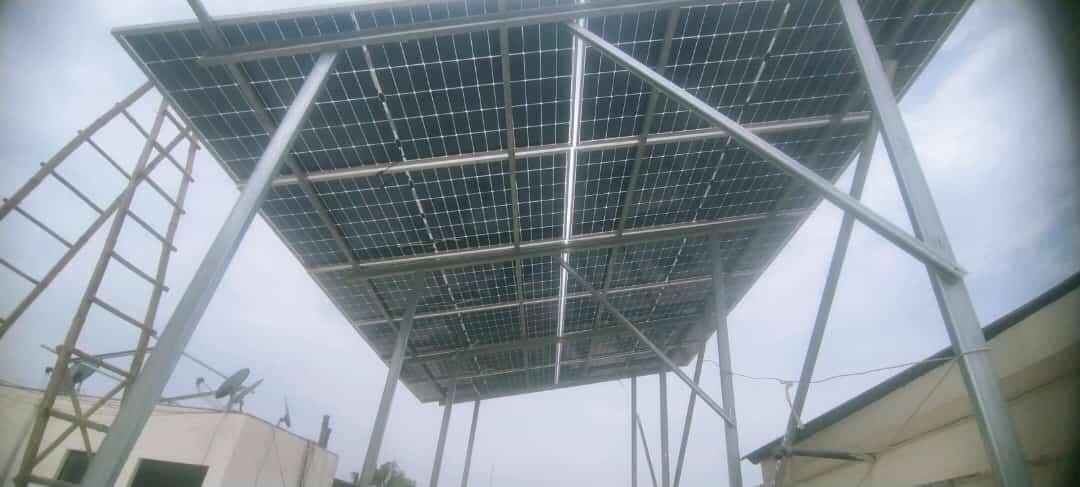
This case study brings together the published specification, the raised bifacial array shown in the installation photo, the owner's feedback and the current rules for a 10 kW home system in Delhi.
The system as published
| Item | Published figure |
|---|---|
| Location | Greater Kailash, New Delhi |
| Type | Residential rooftop |
| Rated capacity | 10 kW |
| Modules | 530 Wp Adani bifacial |
| Subsidy | Facilitated by Verde Solaire |
| Posted | 27 May 2023, installation in progress |
At 530 Wp, a 10 kW array uses roughly 19 modules. The elevated structure keeps the rear face of the bifacial panels clear to receive reflected light from the roof.
Why the panels sit on a raised structure
A bifacial module has cells that work from both faces. The front takes direct sunlight in the ordinary way; the rear takes light that bounces up from the roof surface. That rear contribution only exists if there is a gap under the panels, so the array in the photo is mounted on a tall galvanised frame with nothing between the modules and the roof. A panel of this type laid flat on a roof would perform like a standard one.
The structure also leaves the roof usable underneath, which is a common request on a Delhi home where the terrace is living space. The solar panels page explains mono PERC, bifacial and TOPCon modules, and the Janakpuri 10 kW project is a comparable Delhi installation with a named inverter.
What the owner said
Jai Kumar Manghnani wrote on Verde Solaire's testimonials page: "We had agreed for 530W Mono Perc Adani solar panels for my solar energy system, but they installed a better bifacial solar panel of Adani without charging anything extra from us." He added that "the processes were simple and they have also helped in applying for central subsidy for solar power plant", and that his family recommends the company for installing a solar power plant.
What this means for a Delhi home today
This project was built in 2023, before PM Surya Ghar: Muft Bijli Yojana. Under the current scheme the central subsidy is ₹78,000 for any system of 3 kW or more, and Delhi adds ₹26,000 per kW, capped at ₹78,000 (3 kW). A home system above 3 kW and up to 10 kW also earns a generation-based incentive of ₹2 per unit for 5 years from commissioning, paid monthly against the bill; any excess to the bank account. Subsidised systems now need both the modules and the cells must be made in India, and from 1 June 2026 the cells must appear on the ALMM List-II; Adani is an Indian manufacturer, but the specific module on any new quote should be checked against the list.
Verde Solaire is a registered PM Surya Ghar vendor in both Delhi and Uttar Pradesh. The net-metering steps for each Delhi electricity board are on the Delhi net-metering page; the name on your bill says which one applies. Current prices for this size are on the 10 kW pricing page, the Delhi subsidy rules on the Delhi subsidy page, and every published installation on the projects page.
Questions people ask
Start with a clear plan for your savings
Get a free roof assessment and a written quote for branded equipment. We will also explain the loan, installation, net-metering and subsidy steps.